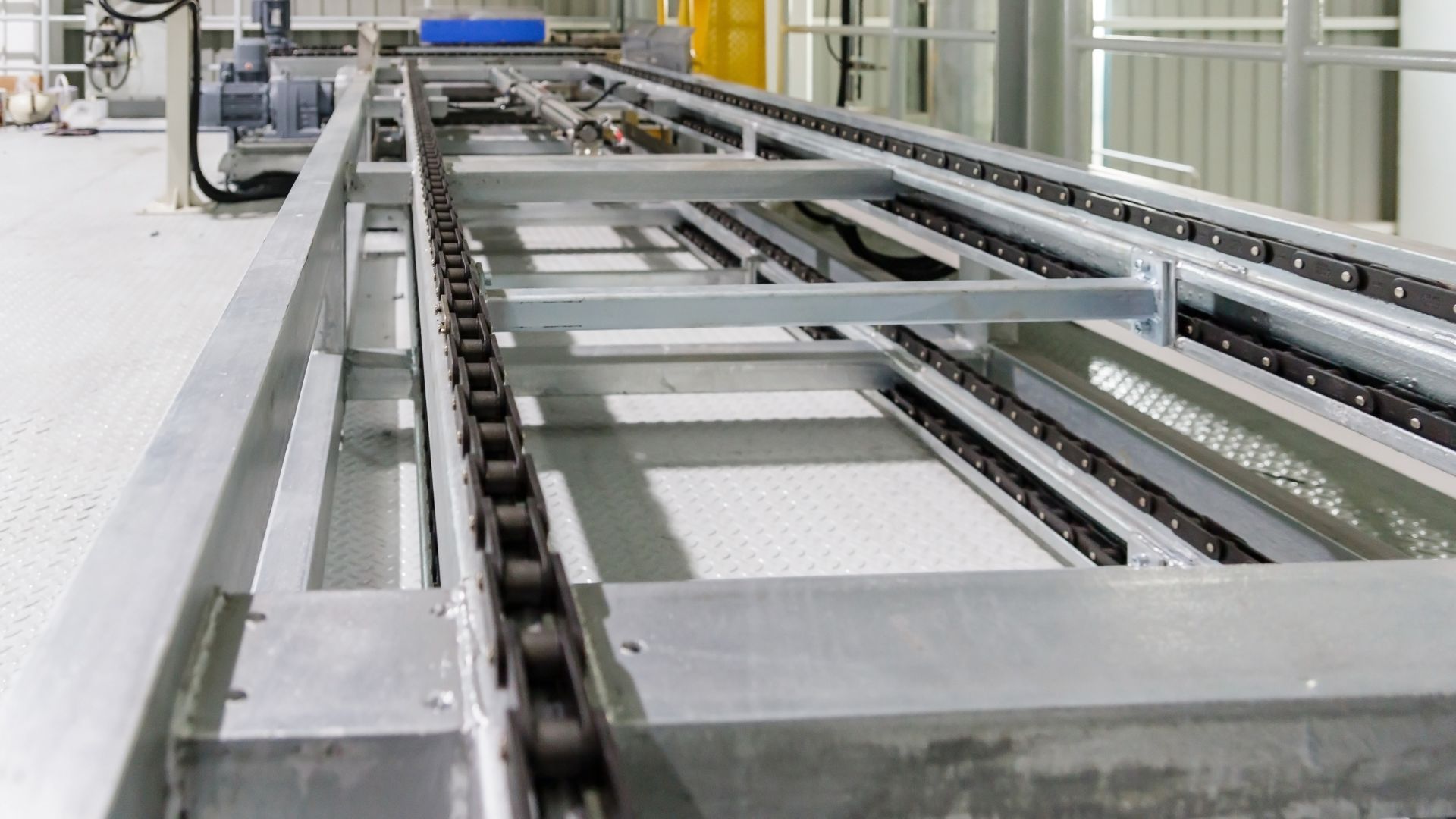

A Minnesota Department of Labor and Industry case shows a roller conveyor eliminated manual transfers and helped minimize manual material-handling injuries. It also reduced the time employees spent moving product to shipping.
That is the point of plastic roller conveyor systems in real plants. They are not a nice upgrade. They decide flow, labor touchpoints, and whether minor jams turn into downtime.
This guide helps you choose the right conveyor approach for your load and environment, then lock the critical specs in your RFQ. You will know what to ask for, what to avoid, and what assumptions must be written down before you approve a quote.
Key Takeaways:
Pick The Right Fit First: Confirm plastic roller conveyor systems match your load, impact, and environment.
Efficiency Shows Up Later: Focus on jam rates, damage, and maintenance at week six, not day one.
Lock The Specs That Matter: Roller pitch, diameter, bearings/seals, width, speed, and transfers.
Force RFQ Assumptions: Require written load-rating and scope boundaries so quotes stay comparable.
Get A Scope Sanity-Check: Share product, load, and environment to validate specs before you buy.
What Are Plastic Roller Conveyor Systems?
Plastic roller conveyor systems move unit loads over rollers mounted in a frame, either by gravity or by a powered drive. You’ll typically see them in packaging, assembly, and end-of-line areas where products like cartons or totes need consistent, repeatable movement with minimal handling.
Where Plastic Rollers Fit Best
Wet or Corrosion-Risk Areas: plastic/polymer roller designs are commonly specified for hygienic or corrosion-risk environments and can be cleaned with conventional detergents.
Chemical or Lubrication-Sensitive Zones: polymer-based rollers and bearings are marketed for corrosion resistance and “no lubrication” use cases (useful where grease is a contamination concern).
Lightweight to Medium Loads: plastic rollers are widely positioned for lighter-duty conveying compared with steel options.
Lower-Noise Requirements: all-steel constructions tend to run louder than roller designs using polymer housings, so specifying polymer components can be part of a noise-reduction approach.
Gravity Vs Driven Roller Conveyors
If You Need This | Choose This | What That Means In Practice |
Simple transport using slope and manual control | Gravity Roller Conveyor | Items move by incline/decline; simplest mechanics and lowest complexity. |
Controlled speed, flat runs, inclines, or predictable flow | Powered/Driven Roller Conveyor | Rollers rotate via a powered mechanism (motor + belt/chain/lineshaft options vary). |
Now let’s translate that into where plastic roller conveyor systems actually improve throughput, labor efficiency, and uptime on the floor.
How Plastic Roller Conveyor Systems Enhance Industrial Efficiency
Industrial efficiency is not what a conveyor does on day one. It is what still holds at week six, when cartons queue, shifts change, and minor jams start costing real time. The right plastic roller conveyor systems reduce handling, prevent bottlenecks, and protect product flow when the line is under pressure.
Plant Problem To Fix | Conveyor Choice That Solves It |
Too much manual carrying and wasted travel time to shipping | Add a conveyor transport path so product moves without repeated employee handling |
Downstream stations keep starving or flooding | Use accumulation (buffer and queue) so unit loads feed processes consistently |
Cartons scuff or get crushed when they stack up | Use zero-pressure accumulation so items do not contact during accumulation |
Rollers corrode in wet areas and maintenance spikes | Specify polymer or plastic roller components for corrosion resistance and chemical exposure fit |
You need simple flow control but product can tolerate light contact | Use minimum-pressure accumulation where contact is acceptable, and reserve ZPA where it is not |
Before you spec anything, use this fit check to confirm plastic roller conveyor systems are the right choice for your load, environment, and abuse level.
Material Fit Check: Plastic Rollers Vs Steel Rollers
Don’t treat “plastic rollers” as the spec. Treat it as a fit decision based on environment, load/impact, and the bearing/seal package. This grid is only to prevent wrong quotes fast, not to replace vendor rating checks.
If This Is True On Your Line | Lean Plastic Rollers | Lean Steel Rollers |
Area is wet / washdown / corrosive | ✅ | ⚠️ |
Loads are heavy or impacts are frequent | ⚠️ | ✅ |
Product bottoms are soft / scuff-prone | ✅ | ⚠️ |
Temperature is high or uncertain | ⚠️ | ✅ |
Dust/grit is heavy and seals matter most | depends on seals | depends on seals |
One-line buyer guidance: If load or impact is uncertain, make the vendor state per-roller load rating assumptions (load distribution, roller spacing, shaft support) in writing.
Once you’ve confirmed the roller material fit, use this 2-minute spec guide to define the exact configuration vendors must quote.
2-Minute Spec Guide

This is the final filtering before RFQ. It turns plastic roller conveyor systems into a measurable scope that vendors can’t reinterpret. Use this to lock the specs that actually drive jams, damage, and maintenance.
Specs to lock Iin writing:
Unit Load Details: [length × width × height], weight each: [ ], bottom type: [flat/soft/ribs], minimum gap between items: [ ]
Conveyor Width (Between Frames): [ ] and required side clearance/guides: [ ]
Roller Diameter: [ ] and roller material: [plastic/polymer grade if known]
Roller Pitch (Center-To-Center Spacing): [ ] (vendor must confirm based on your smallest item)
Roller Face Length: [ ] and shaft/axle type: [spring axle/hex/round], retention: [ ]
Bearing And Seal Package: bearing type: [ ], seal type/IP rating if needed: [ ]
Rated Load Assumptions: per-roller load rating and how it was calculated (load distribution + supports)
Drive Type (If Powered): [gravity / driven], drive method: [belt/chain/lineshaft/MDR], speed: [ ]
Accumulation Requirement: [none / minimum-pressure / zero-pressure], zone length: [ ], controls scope: [ ]
Environment: [dry/dusty/wet/washdown/chemical exposure], temperature range: [ ], cleaning chemicals: [ ]
If you want a faster, lower-risk buy, a practical supplier can help validate your conveyor specs and RFQ scope before quotes turn into downtime.
How Aqua Poly Helps You Spec And Start Up The Right Conveyor Line
When plastic roller conveyor systems are quoted loosely, plants pay later in jams, product damage, and maintenance churn. Aqua Poly helps buyers turn “we need a conveyor” into an application-matched scope that vendors can quote consistently.
Products And Solutions Support
Conveyor and Material Handling Equipment: Helps scope conveyor needs alongside the rest of the line so flow, transfer points, and handling assumptions are clear.
Automation Support: Aligns conveyor movement with part handling and automation requirements so downstream stations don’t become bottlenecks.
Components That Matter In The Field: Supports practical component selection where durability and serviceability affect uptime.
Services Aqua Poly Provides (Engineering-Led, Practical Support)
Equipment Selection: Helps choose the right conveyor approach based on product type, load, environment, and throughput targets.
System Integration: Engineers how conveyors tie into upstream and downstream equipment so the full line runs as one system.
Installation And Startup Support: Supports commissioning and handoff so responsibilities and acceptance checks are clear.
Parts Sourcing: Helps identify and supply replacement parts to reduce downtime from sourcing delays.
Ongoing Technical Support: Helps troubleshoot when performance drifts, jams increase, or operating conditions change.
Contact us to review your conveyor requirements and get a scope that holds up after production ramps up.
Conclusion
Most conveyor disappointments come from vague scope and wrong fit, not the roller itself. With plastic roller conveyor systems, start by confirming material fit, then lock the specs that control jams and maintenance. Finally, force RFQ assumptions in writing so quotes stay comparable.
Aqua Poly helps buyers translate product, load, and environment into an integration-ready conveyor scope that holds up after ramp-up.
Reach out to us with your unit load details, peak weights, and operating conditions for a spec recommendation and a quick quote sanity-check.
FAQs
1. Why do plastic roller conveyor systems work fine at low volume, then jam during peak shifts?
Because spacing, transfer points, and accumulation behavior weren’t specified for real throughput and peak congestion.
2. What’s the most common reason cartons skew or stall on rollers?
The smallest carton footprint isn’t supported by the roller pitch or the transitions, so it catches and rotates.
3. How do I stop product scuffing when items queue up?
Specify the accumulation method and contact rules upfront, then design guides and zone behavior around your packaging.
4. Why do bearings fail early even when rollers look “fine”?
Seals and contamination protection were mismatched to water, dust, or cleaning practices in that zone.
5. What should I send a vendor to get a quote that’s actually comparable?
Your smallest and heaviest unit load, bottom surface type, environment conditions, and a clear definition of accumulation and transfers.