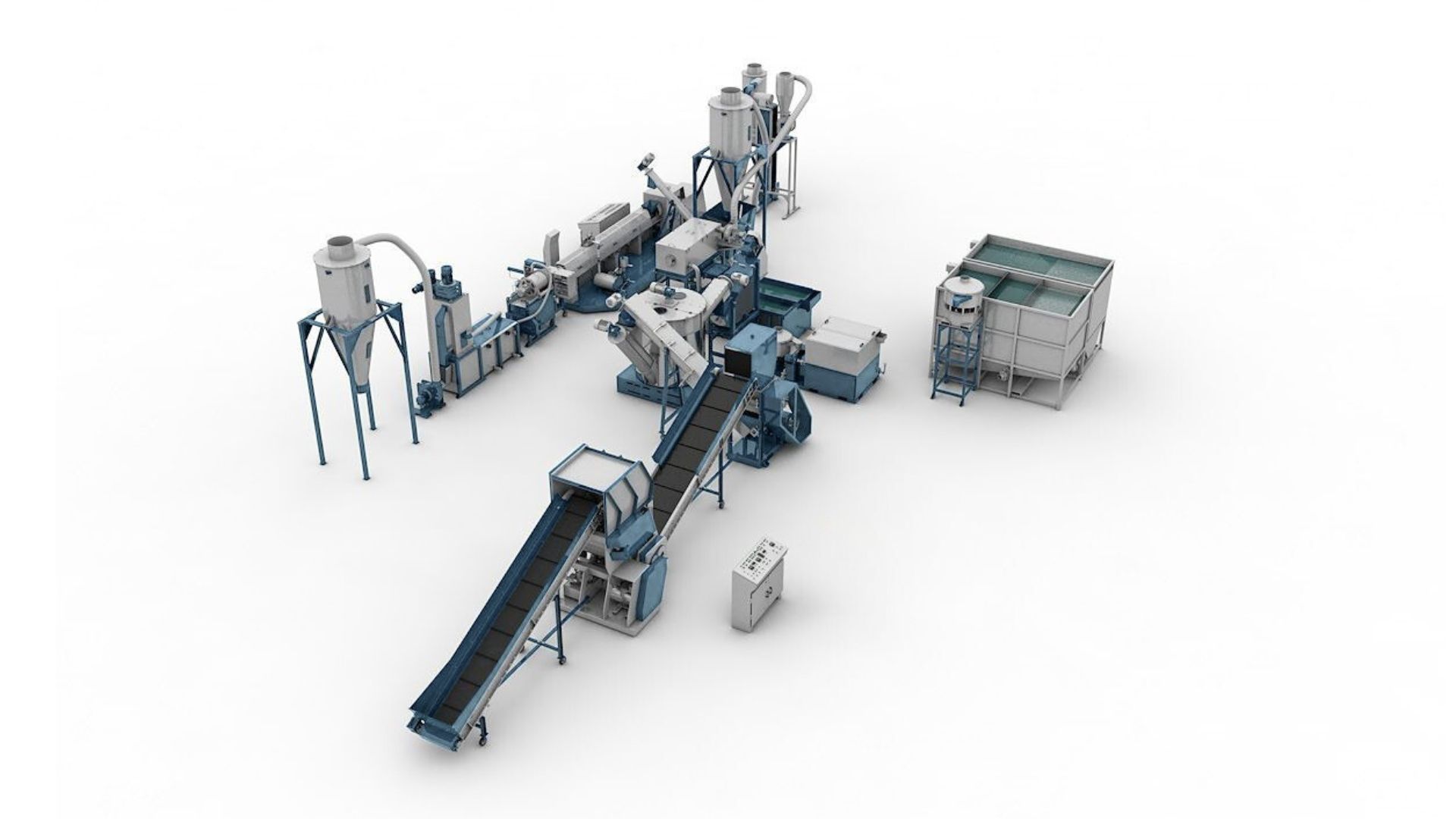

OSHA’s combustible-dust guidance puts the “why” in plain language: capture dust before it escapes into a work area and contain dust within equipment/systems designed to handle it safely. If dust is drifting onto floors, ledges, or nearby machines, you’re not just cleaning more: you’re losing uptime, loading filters faster, and increasing risk.
This guide helps industrial buyers choose the best dust separator for the job, then turns that choice into a simple selection + RFQ + acceptance framework. So quotes are comparable, and performance is provable at startup.
Quick Take:
Start By Defining The Job. You’re hiring for containment, filter protection, flow stability, or material dedusting.
Get Placement Right Early. The same separator can underperform purely because it’s installed in the wrong spot.
Pick The Separator Class That Matches The Job. Choose a cyclone/outlet separator, an air-material separator, a pre-cleaner setup, or a dedusting system.
Request Quotes Using Real Inputs. Provide airflow at the point, dust loading pattern, discharge path, and what carryover is acceptable.
Use Local Support If You’re In Territory. If you’re in IL/WI/MN/ND/SD, reach out to Aqua Poly to sanity-check the scope before you commit.
What “Dust Separator” Actually Means In Industrial Plants
In an industrial setting, “dust separator” isn’t a brand contest. It’s the unit that keeps dust from escaping into the work area, and separates material/dust from air where your process needs it, typically in pneumatic conveying discharge points or dedusting steps.
Health and Safety Executive guidance specifically calls out sealing leakage points around powder handling systems to prevent dust escape and accumulation
With that in mind, the “best” separator depends on which world you’re actually in:
Decision Signal | Shop-Vac Separators | Industrial Dust Separation |
Primary Outcome | keep vac filter from clogging | keep dust inside process system |
Where It Sits | inline before a shop vac | at conveying discharge / outlet points |
What It Separates | mostly bulk debris | dust, fines, particulates from air stream |
What “Failure” Looks Like | suction drops, filter cakes | dust escape, plugging, unstable conveying |
Typical Proof | cleaner filter, fuller bucket | stable discharge + controlled carryover |
Design Anchor | pre-separation for vacuum | separation at material outlet points |
Once you’re sure you’re choosing for an industrial application, the next step is simple: define the single job you need the dust separator to do.
What Job Are You Hiring It For?
In industrial plants, “dust separator” depends on what you’re trying to control first: separating conveyed material from air, cleaning/dedusting product for quality, or knocking down heavy dust load before final filtration. When you pick the job in plain language, the right equipment family becomes obvious, and your RFQ stops being guesswork.
Here’s the quick chooser (find your row and start there):
Symptom Signature | Job You’re Hiring For | 5-Minute Confirmation |
Dust shows up in one “hot zone” (one transfer/discharge), even after cleaning | Contain dust at the source point | Watch the point during a normal dump/transfer; look for a visible puff or streak line |
Filters are the pain (rapid DP rise, frequent pulsing/cleaning, frequent changeouts) | Reduce dust load before filtration | Trend differential pressure over a shift; look for fast ramp after certain operations |
Conveys “fine,” then randomly plugs/surges at certain rates or materials | Stabilize air/material separation at discharge | Note if plugging correlates with throughput changes or specific material lots |
Material quality is the pain (dusty pellets/regrind, defects tied to fines) | Remove fines from the product stream | Take a small sample pre/post your current step; compare visible fines/dust |
Housekeeping load keeps creeping (dust on ledges/nearby assets, hard-to-reach buildup) | Prevent dust escape and accumulation in the area | Identify where dust settles first; trace back to the nearest source interface |
“We keep fixing filters, but the room stays dusty” | Containment first, filtration second | Look for leakage points on ducts/joints/enclosures during operation |
If you match two rows, pick the one costing you the most right now (downtime > scrap > maintenance spend > housekeeping).
Before you compare models, get placement right, because the same separator can perform great or fail purely based on where it sits in the airflow and material path.
Where A Dust Separator Should Sit In The System

In industrial setups, separators are typically positioned where they can separate material from conveying air cleanly or reduce dust loading before downstream filtration. Getting this wrong shows up as carryover, dust escape, unstable discharge, or filters doing work they were never meant to do.
At Material Outlet Points In Pneumatic Conveying Lines
This is a common placement for cyclones used to separate dust/fines/particulates from the airstream at outlet points (i.e., where the conveyed material is meant to drop out).
At The Discharge End Into A Compactor, Baler, Or Container
Air/material separators are designed to sit at the discharge end so material drops cleanly while conveying air exits through an air outlet. Often, to open air or to a filter, rather than blasting downward with the product.
At The Discharge End When You Need Minimal Air Discharged With The Material
Static separators (like STS/KU types) are explicitly described as being placed at the discharge end to minimize discharged air volume with the material and improve separation stability.
Upstream Of Final Filtration When Dust Loading Is High Or Product Recovery Matters
Cyclones are commonly used alone or as a pre-cleaner, especially for high dust load or product recovery scenarios, so filters don’t take the full hit.
At The Point Where Dust Would Otherwise Escape Into The Work Area
If dust is leaking from equipment/ducts into the work area, OSHA guidance emphasizes designing dust-handling systems to prevent dust escape (i.e., eliminate leakage). That’s a “placement + enclosure” problem, not just a separator spec.
With placement clear, the only remaining decision is selecting the separator “class” that matches your job.
The 2-Minute Selector For The Best Dust Separator
This table gives you a fast, defensible choice based on job + dust load + where air should go, not brochure features. Pick the row that matches your situation and use the “choose this” output as your internal decision.
Your Job | Dust Load Reality | Where The Air Must Go | Choose This |
Separate material from the conveying air at discharge | medium to high | Exhaust air must leave via a controlled outlet | Cyclone at the outlet point |
Discharge into compactor/baler/container with minimal air blasting down | medium | Air should exit separately from the product | Air/material separator at the discharge end |
Reduce dust load hitting final filters (pre-cleaning) | high | Air continues to filter stage | Cyclone as pre-cleaner + final filtration |
Remove fines/light impurities from product stream (quality first) | varies | Dust must be removed from material stream | Dedusting/separation system |
Once you’ve picked the job and placement, the next step is giving vendors measurable inputs.
What To Collect Before You Request Quotes
This is the minimum data set that makes quotes comparable and prevents underperforming installs. Keep it simple, but specific.
Process Location And Function: Where it sits (transfer point, conveying discharge, pre-filter) and what it must achieve (containment, pre-separation, product dedusting).
Airflow Basis At That Point: Actual airflow range at the separator location (min/normal/max), not just fan nameplate. This is the #1 sizing anchor.
Conveying Mode and Line Context: Pressure vs vacuum conveying, discharge destination, and whether the separator is the “receiver” that disengages solids from conveying gas.
Dust Loading Rate: Estimated dust mass rate (low/medium/high is okay if you can’t quantify yet) and whether it spikes during certain operations (dumping, grinding, trimming).
Particle Profile That Matters: What fraction is “fine” vs “coarse,” and what you’re trying to capture/remove, cyclone performance is strongly tied to particle size and gas velocity.
Material Behavior Flags: Sticky/oily, damp, stringy, or abrasive material (these change buildup risk, wear, and how reliably separation holds).
Where Separated Dust Must Go: Into bin/bag/continuous discharge—plus whether you need sealed handling to prevent dust escape at the collection point.
Downstream Constraint You’re Protecting: Are you protecting filters (reduce loading), product quality (remove fines), or housekeeping/safety (stop escape)? Write one sentence.
Allowed Pressure Drop And Ducting Reality: What static pressure margin you have (or can tolerate) across the separator, this determines whether the system holds airflow where it’s supposed to.
If Combustible Dust Is A Possibility: Note it upfront; duct transport velocity and dust accumulation control become critical design constraints.
Once you’ve captured your process inputs, use an RFQ checklist to force every vendor to quote the same scope and responsibilities.
RFQ Checklist To Compare Quotes On The Same Scope

Copy/paste the bullets below into your RFQ, so quotes stay comparable.
Job Statement (One Line)
“We are hiring a dust separator to achieve ___ at ___ location, with air routed to ___.”
Placement And Tie-In Boundary
Exact install point, inlet/outlet orientation, and what the vendor includes for ducting transitions and connection hardware.
Airflow Basis At The Separator
Min/normal/max airflow at that point, and allowed pressure drop across the separator.
Material And Dust Loading Basis
Material type, dust loading rate profile (steady vs spikes), and any behavior flags (sticky, damp, abrasive, stringy).
Discharge And Dust Handling Scope
Where separated dust goes (bin/bag/hopper), discharge method, and how dust escape is prevented at collection.
Downstream Equipment Dependency
What happens to exhaust air (to final filter, to return air, or to safe discharge) and what the separator must protect (filters, product, housekeeping).
Performance Target In Plain Language
What must be removed (dust/fines/light impurities), what carryover is acceptable, and where carryover is not acceptable.
Instrumentation And Access
What access doors/cleanout points are included, and what performance indicators are provided (e.g., DP tap points if relevant).
Commissioning And Acceptance Check
Run condition (throughput/airflow basis), test duration at steady state, and pass/fail checks tied to your job statement.
Exclusions (One Page)
A single list of everything “customer-provided” (power, ducting beyond tie-in points, civil work, filters/collectors, controls integration, etc.).
If you’re in IL/WI/MN/ND/SD, the quickest way to avoid spec gaps is to have Aqua Poly sanity-check your separator choice, placement, and quote scope before you commit.
How Aqua Poly Supports Dust Separator Decisions
If you’re choosing the best dust separator for an industrial system, Aqua Poly can help you get from “symptom + job” to a quotable scope. Especially when the solution involves Kongskilde Industries dust separation and conveying blowers listed on their site.
Selection Support: Helps match your job-to-be-done (containment, pre-separation, discharge separation) to the right separator approach and placement in the system.
Integration Planning: Helps clarify system boundaries, where it ties into your ducting, discharge points, and how conveying air exits. So performance doesn’t collapse due to “wrong location” installs.
Installation/Startup Coordination: Supports getting the system up and running cleanly by aligning install realities with what was quoted (placement, discharge path, and practical access).
Parts Request Pathway: Uses our Request Parts channel to streamline parts identification and sourcing when maintenance or wear parts become the bottleneck.
Ongoing Support: Provides an ongoing support/contact path for follow-up questions and system changes after startup.
Contact Us if you’re in IL/WI/MN/ND/SD to sanity-check your dust separator choice, placement, and quote scope before you lock vendor pricing.
Conclusion
A dust separator purchase usually goes sideways the same way: the separator gets placed wrong, dust escape continues, filters overload, and cleanup turns into downtime and rework.
The fix is simple: define the one job you’re hiring for, confirm placement in the system, and force vendors to quote the same airflow basis, discharge path, and acceptance checks in writing.
If you’re in IL/WI/MN/ND/SD, Aqua Poly can sanity-check your separator selection, tie-ins, and scope before you commit—reach out to us.
FAQs
1. What’s The Difference Between A Dust Separator And A Dust Collector?
A separator removes dust/material from an air stream as a process step; a collector is typically the final filtration stage that captures remaining dust.
2. Where Should A Dust Separator Sit In A Pneumatic Conveying System?
Most are placed at the discharge/outlet point where conveyed material drops out and air exits through a controlled outlet.
3. How Do I Know If I Need A Separator Or Just Better Filtration?
If filters overload quickly, a pre-separation step is often missing; if dust is escaping at a transfer point, it’s a containment/placement issue first.
4. What Inputs Should I Provide Vendors To Size A Dust Separator Correctly?
Airflow at the separator location, dust loading profile, material behavior (sticky/abrasive), and where exhaust air and separated dust must go.
5. What’s A Simple Acceptance Check After Installation?
Run at normal airflow/throughput and verify stable discharge with controlled dust escape (no visible puffs/leaks) and reduced downstream filter burden where applicable.